
What is Equine Body Work?
Health and performance in your horse begin with balance. Each horse has an internal state of balance — known as homeostasis — that allows the body to perform daily functions with ease and efficiency.
Precise equine bodywork supports this natural balance within the body. By addressing restrictions and compensatory patterns, your horse is better able to move freely, perform at their highest potential, and reduce limitations caused by physiological stress or imbalance.
Rachel incorporates a variety of bodywork modalities that provide specific, intentional input to the nervous system. These gentle impulses help shift the information the body is receiving, allowing healthier movement patterns and improved function to emerge.
Taking a whole-horse approach, Rachel works collaboratively with you and your horse’s care team — including your veterinarian, trainer, and farrier — to support a comprehensive and integrated healthcare routine.
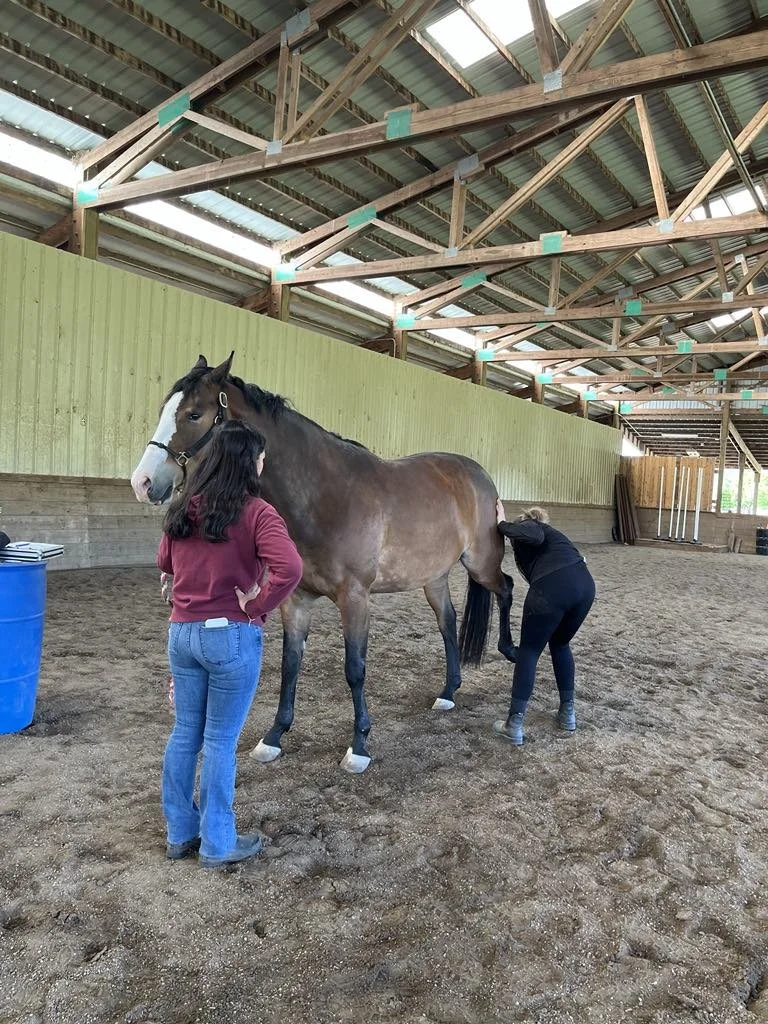
What is Equine Osteopathy?
Equine Osteopathy is the specific application of principles developed in human osteopathy, thoughtfully translated and adapted to meet the unique structural and physical needs of the horse.
It is based on the understanding that optimal health depends on structural integrity and the body’s ability to self-regulate. When restrictions or immobility occur within the body, compensation patterns can develop. Through precise, hands-on techniques, osteopathy works to restore motion, improve communication within the body, and support overall function.
This modality evaluates and addresses three primary systems, often referred to as the three pillars of the body:
The Craniosacral System — including the skull, sacrum, spinal cord, cerebrospinal fluid, and associated soft tissues
The Visceral System — the organs and their connective tissue relationships
The Parietal System — the musculoskeletal (skeletal and fascial) system
When these systems function in harmony, they create homeostasis — a state of balance within the body.
Equine Osteopathy supports early recognition of imbalance and helps maintain structural and functional health. By addressing subtle restrictions before they become larger issues, this work can enhance performance, mobility, resilience, and overall well-being.
Taking a whole-horse approach, I strive to work in collaboration with you and your horse’s care team — including your veterinarian, trainer, and farrier — to support a comprehensive and integrated healthcare routine.
